Link’s abilities in Tears of the Kingdom illustrate the remix principles of selectivity, recombinatoriality, and recyclability that guide all creative processes and production—no matter how limiting the context might seem.
The Legend of Zelda and Philosophy: Link Outside the Box is available now from Wiley-Blackwell. It’s always fun for me to apply my work on remix theory to cases in popular culture that depict its principles, and the follow-up to Nintendo’s Breath of the Wild happened to be a really great example.
My chapter in the collection, “Remix and Restrictive Creativity in Tears of the Kingdom,” looks at how Link’s new abilities in the game—specifically Fuse and Ultrahand—demonstrate the principles of selectivity, recombinatoriality, and recyclability from within the field of remix studies. These principles guide creativity and production even in the context of the restrictive and seemingly limited parameters that guide Link’s abilities. And the situational gameplay encountered throughout Tears of the Kingdom offers players both a unique illustration of this and a reminder of how structural limitations operate in our own lives outside of Hyrule.
Here’s a little preview of my chapter (the introduction and bit more from the section that follows). Mine was one of a few to be accompanied by a screenshot as well (a complement to what’s copied below), though it’s clearer here in full color.
You can’t help but explore Hyrule’s magnificent terrain—and hidden bounties—amid the game’s endless quests and adventures. And when a clear sky’s early morning sun joins the warmth of the previous night’s fire, that’s often the most enjoyable—and perhaps rewarding—way to start the day. As you slowly stand and begin a light jog in a seemingly random direction, a meandering Blupee might catch your eye. This wouldn’t be the first time you’ve seen one, of course. And you know exactly what’s waiting for you on impact. As you race to loose an Arrow for that little bump in rupee count, an unassuming wall behind it beckons you to investigate its curious entrance. Also not a first. Anxious to discover what’s inside, you speed through its corridors and Brightbloom-filled recesses. But it isn’t long before you turn an unexpected corner in this recently opened cave and find yourself face-to-face with a couple of Horriblins—and no suitable weapon to fend them off. Low on stamina and with a late morning mission you’re now set on seeing through, options certainly seem bleak—until you spot a Wooden Stick in the far corner of the screen. After racing to grab it and frantically searching through your inventory, you notice that Hylian Shroom you picked up before dozing off the previous night. With a quick combination of buttons, that seemingly worthless stick and mildly restorative edible combine —or, fuse—to turn into a Bouncy Spear capable of sending your unsuspecting enemies flying in the opposite direction, giving you just enough time to skirt by and get out of there before regretting your encounter with that ephemeral little bunny.
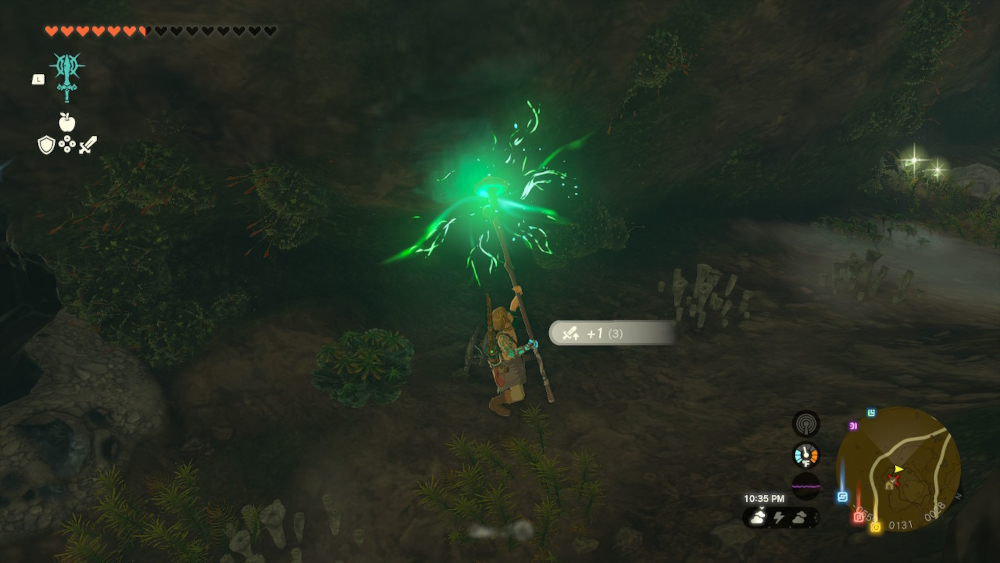
That Bouncy Spear, of course, is just one of several possible combinations of materials and resources in Tears of the Kingdom (TOTK). From Rocket Shields able to send him to otherwise unreachable heights and Muddle Bud Arrows making it difficult for enemies to determine friend from foe, to makeshift cars and flying rafts, Link’s new abilities give him quite a bit of creative freedom to uniquely craft tools, weapons, and vehicles from whatever he encounters. . . . At its core, TOTK is predicated on the sampling of raw material and its use in new ways—whether it’s as simple as cooking eccentric meals with added effects or using ancient Zonaite technology to construct invaluable assistance. As we place these mechanics in dialog with remix theory, we’ll see how remix principles inform Link’s creativity and capabilities. We’ll also see why and how structural limitations need not impede the creative impulse amid restrictive parameters.
Grab yourself a copy of the book to read the rest of the chapter and the other contributions to the volume!
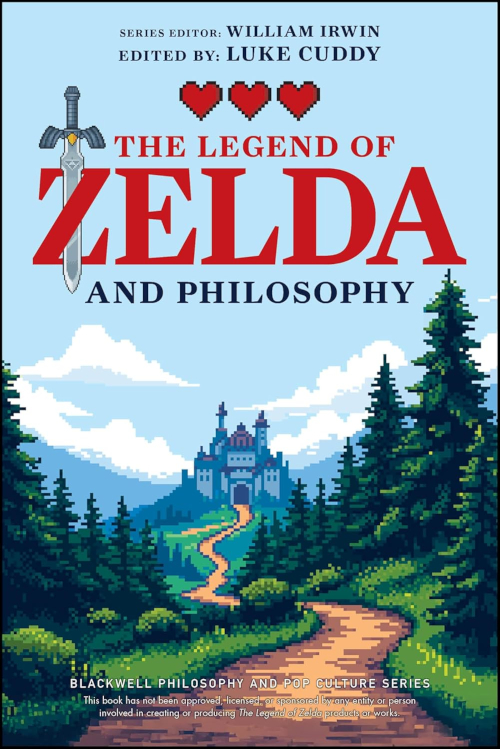
Cover image courtesy of John Wiley & Sons, Inc. 2026.
Leave a Reply