Grunge was about much more than just the music. The industries driving consumer culture certainly noticed as well.
’90s Alternative and Philosophy was published a few months ago by McFarland. It was such a delight to contribute to the collection too. Most of my favorite bands as a kid—Nirvana, Pearl Jam, Soundgarden . . . you know the list—came out of the Seattle grunge scene and shaped much of my musical interests and outlets as an adolescent. Like most others around my age, I’m sure. The first guitar I ever purchased was a Sonic Blue Fender Jag-Stang, after all (Kurt Cobain’s Jaguar-Mustang hybrid design). So reexamining the scene from a much different vantage point in life and from the perspective of what I work on as remix and critical theorist was certainly enjoyable.
Not long after the book was released, my family and I went on a camping trip up to the Pacific Northwest for a couple weeks to spend some time at Crater Lake, Mt. Rainier, and Olympic National Park (and partake in a very rewarding “ice cream experience” at the Tillamook Creamery). But before driving back home, we stopped in Seattle for a few nights. And checking out the Central Saloon was high on the list.
It was early in the evening, with only a few people there. I grabbed a bourbon at the bar and took my time walking around and taking it all in—the history, the vibe, the countless memories I’m sure this place has fostered. There was even a small altar on one of the walls with pictures of Layne Staley and Chris Cornell.
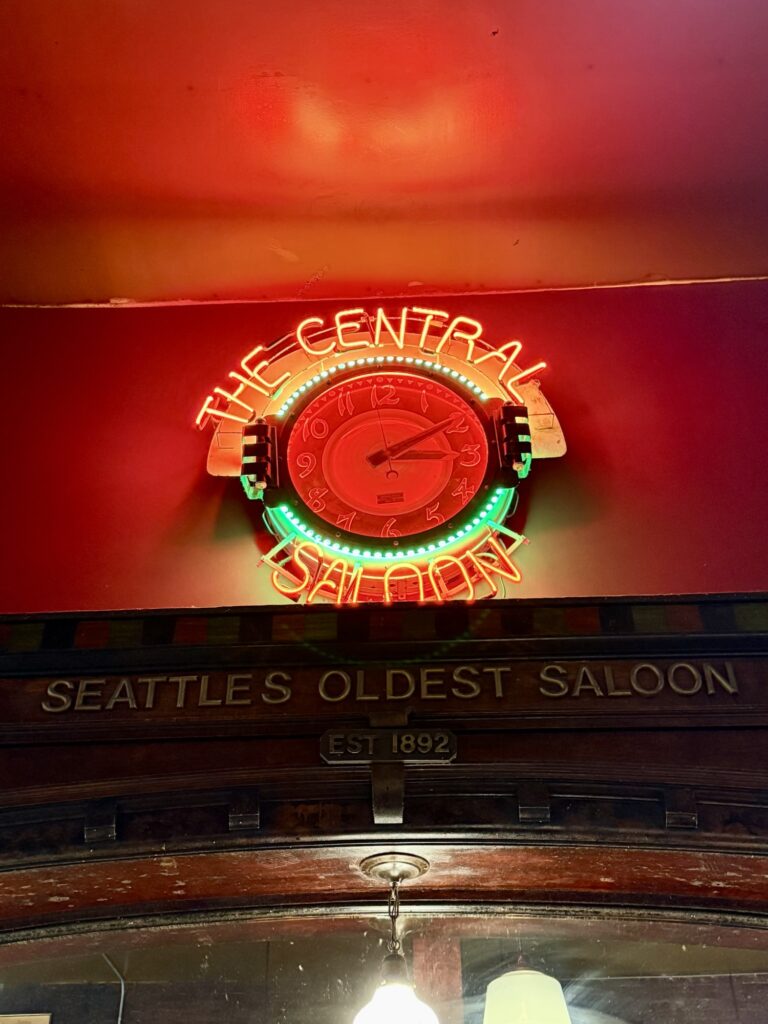
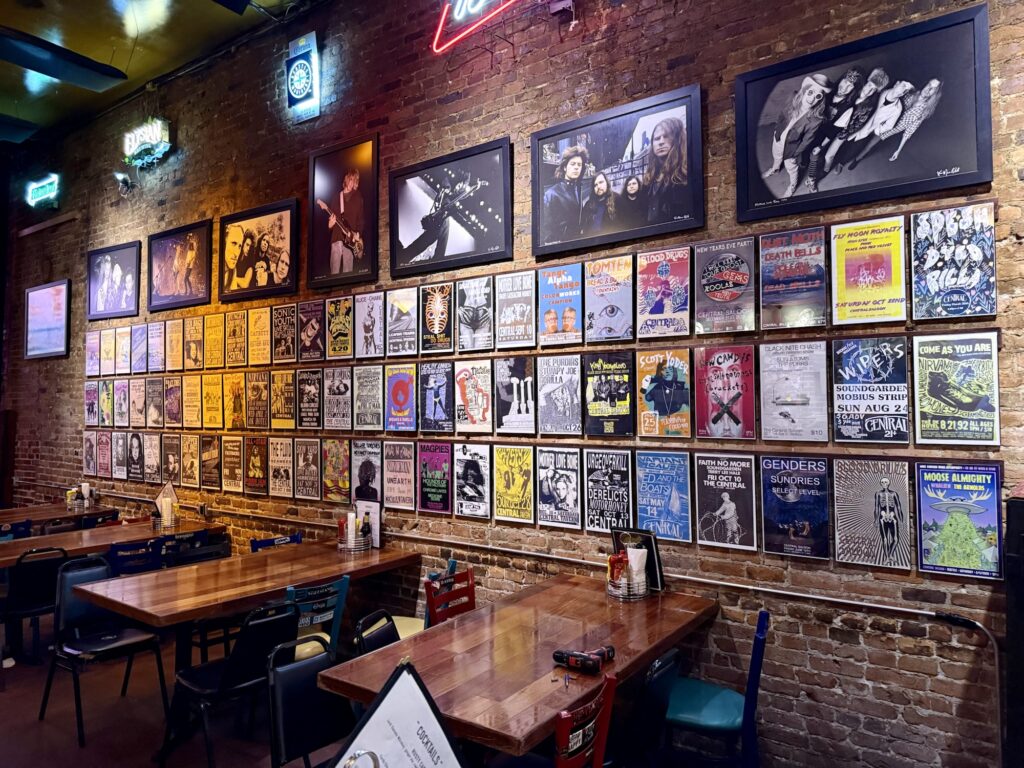
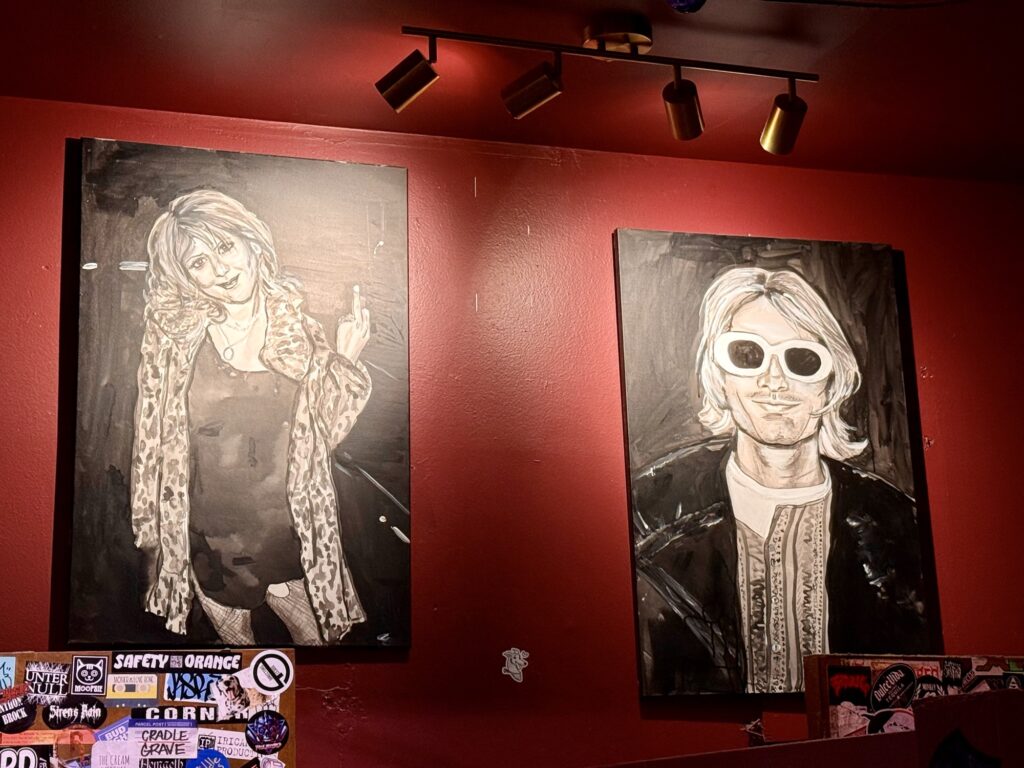
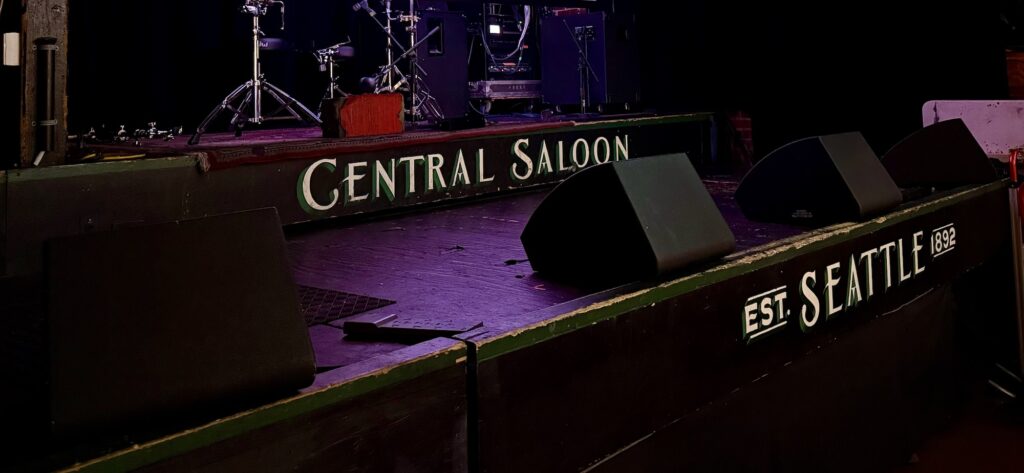
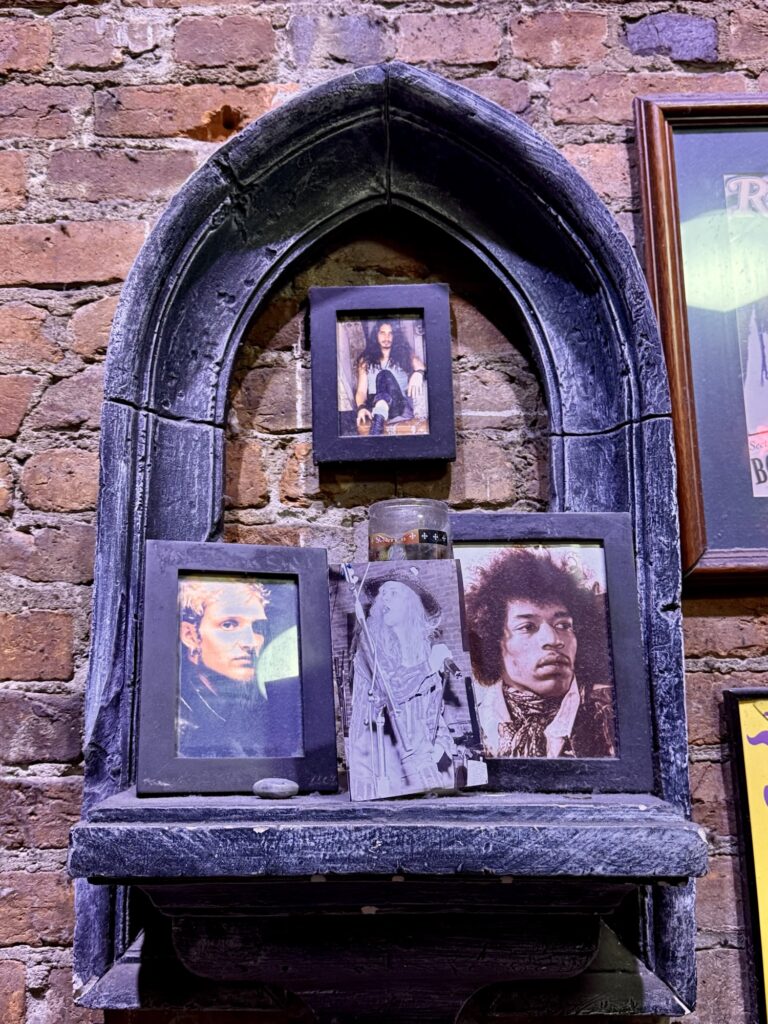
It was certainly a nostalgic experience—one that I didn’t expect to have after starting my chapter with a fictionalized encounter here over thirty years go. But there wasn’t anything fancy about it either. It just felt like a pretty typical tiny downtown venue, refraining from capitalizing on its place in musical and subcultural history (aside from the framed photos of the ’90s greats covering its walls). And honestly, that part of my experience there aligned well with what I had written about.
My chapter examines grunge as a subcultural aesthetic, both as something subversive and as something repurposed by consumer culture that turned it back on itself—a process generally referred to as “recuperation.” Guy Debord and the Situationist International appear in this brief set of pages, along with considerations surrounding the notion of authenticity.
This was easily one of my favorite pieces ever written. I encourage you to check out the entire collection, but here’s a short excerpt from my introduction!
The wet chill in the air hits you like a mildly damp rag after turning onto an open, dimly lit street. Lingering droplets of a morning mist that never seemed to dissipate begin to bead across your determined brow and cracked lips as your lungs contract and adjust to a frigid dusk. This alien suburbia is far from the flashy strips you call home. It’s not long before you spot your destination, pausing a moment to take stock of the surroundings. It’s difficult to tell which appears more somber, the inner threshold of the venue or the succumbing day just outside. Your attention quickly shifts to the cacophony on stage up ahead. The band seems to be tuning their instruments, or maybe they’re already warming up. The scraping feedback and distorted fades obscure their intentions. But the moment they begin to harmonize in a grinding, deafening screech of a melody, the atmosphere shifts. More warble; less dissonance. The crowd loves ’em, and you’re totally transfixed—the frontman donning a baggy cotton shirt, ragged open flannel, and the out-of-place tear in his washed-out Levi’s. A cheap beer from the bar can wait. Something’s happening here, and it looks incredible.
Admittedly, this probably isn’t exactly how it went down for a designer like Marc Jacobs and the triggering inspiration he had for a runway-worthy grunge collection in 1993; in fact, he reportedly had never even been to Seattle, let alone its famed Central Saloon. But you get the idea. There was something alluring from the get-go about not giving a shit and how that looked. And when an attitude and corresponding aesthetic like that starts to capture a generation looking for expressive and emotional fulfillment . . . well, it’s difficult to not catch the eye of those looking to cash in on the next big thing. . . . But this new grungy sound wasn’t just about the music; it was about subverting an entire industry and mainstream celebrity culture by making its screeching riffs and its overall appeal less about performance and more about the rejection of the previous era’s commercialism. . . . And something about slouching around in oversized clothes and wearing loose T-shirts was also very cool. The industries driving consumer culture thought so as well.
But the pointed attempt to not be seen as a product of such an expressive entertainment sector ironically spiraled into a movement that shaped both its own fandom and the commercialism that adjacent industries started co-opting. This essay examines such co-option, paying particular attention to grunge fashion-themed runway shows, collections, trendy designer lines, and how (through the commodification of its anguish and identifiable allure) grunge became what it had characteristically otherwise avoided. We’ll also take a look at the complicated notion of authenticity grounding the matted hair and unkempt zeal behind those angst-driven melodies and guttural bellows, which was meant to separate this new, raw musical energy from what preceded it. Grunge icons such as Courtney Love can sing lines like “I’m all I wanna be” in the face of that hegemonic authority all they want, but as we’ll see, the line separating being authentic and adhering to notions of authenticity is riddled with as many holes as an old, olive-green cardigan.
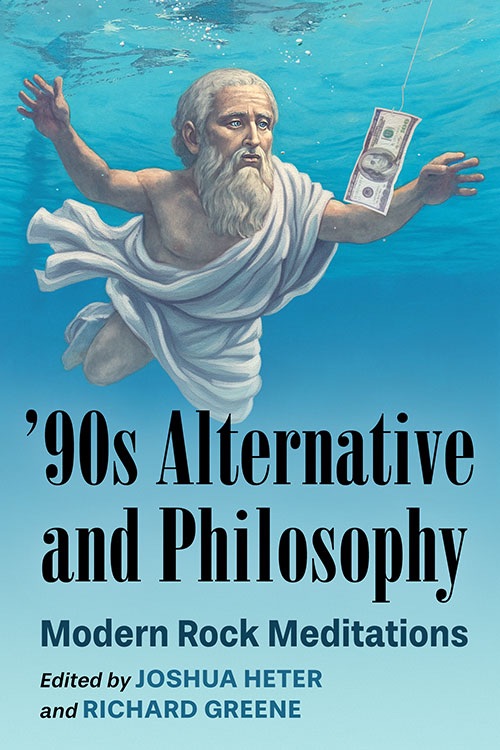
’90s Alternative and Philosophy: Modern Rock Meditations, edited by Joshua Heter and Richard Greene (McFarland & Company, 2026). ISBN: 9781476697239
Cover image courtesy of McFarland & Company, Inc., 2026.
Leave a Reply